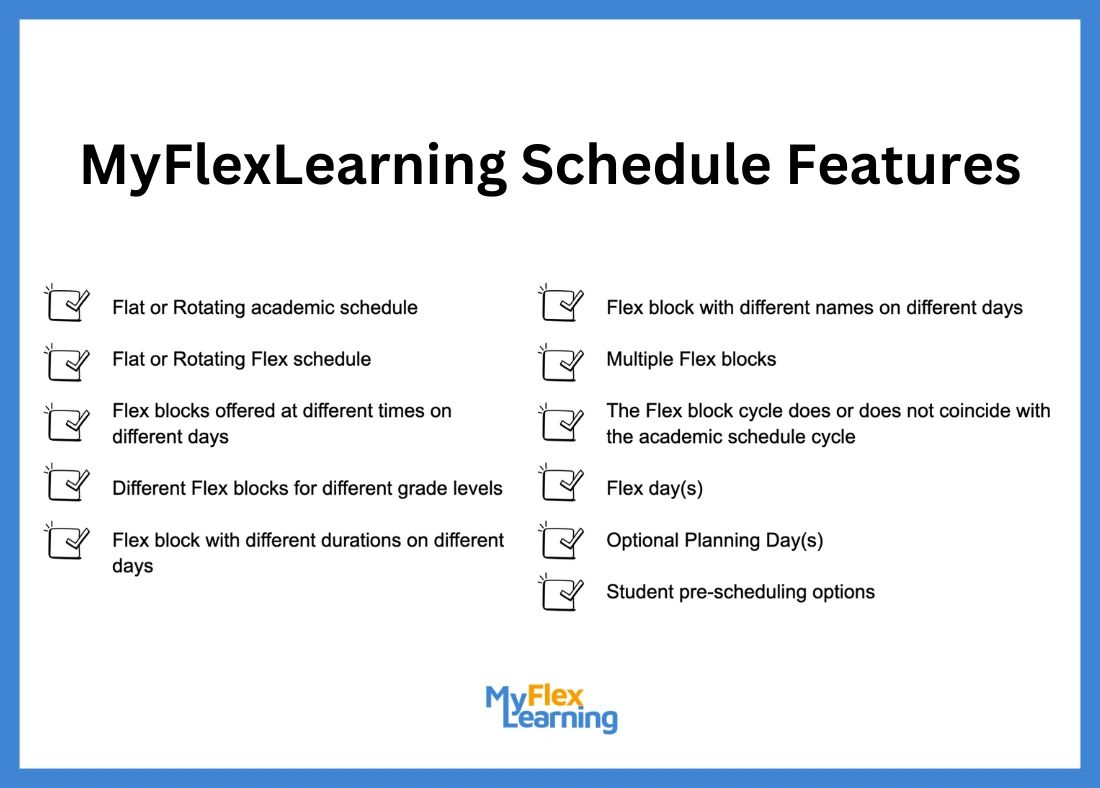
Scheduling Your Flex Block
Congratulations – you are ready to schedule your Flex block! Whether you’ve recently decided to offer a Flex block and have defined goals for it, or you want to refresh your existing Flex block, here are some things to consider:
- Find the time
- Determine the duration and frequency
- Establish the relationship between your academic and flex schedules
- Identify additional Flex block features
With this information you will be able to develop the bell schedule(s) and calendars needed to efficiently operate each school day while setting clear expectations for faculty and students.
Finding the Time
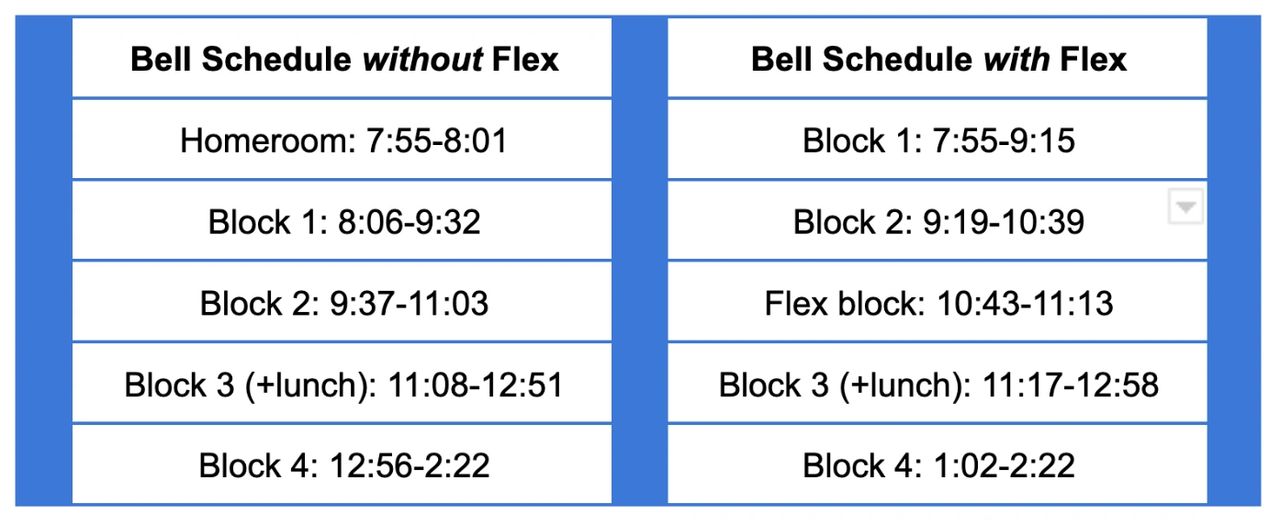
In conversations with many schools, we’ve heard a variety of methods in which they were able to gather the minutes to form the Flex block. This included reducing passing time, repurposing some minutes of instructional blocks, reimagining the traditional study hall block, reusing existing homeroom or advisory blocks. With a thorough review of the master schedule and bell schedule(s), you can utilize these options, and more, to find time for Flex. See an example below of a bell schedule before and after a school added a Flex block into their day.
Determining Duration and Frequency
Once you’ve found the time, deciding the frequency and duration of the flex block are next. These two aspects often have a correlation; schools that offer Flex more frequently tend to have shorter blocks while those that run less frequently tend to have longer ones. Our schools offer flex blocks anywhere from 20 to 82 minutes, with an average of 38 minutes per block. Some schools vary the flex block duration based on the schedule cycle day.
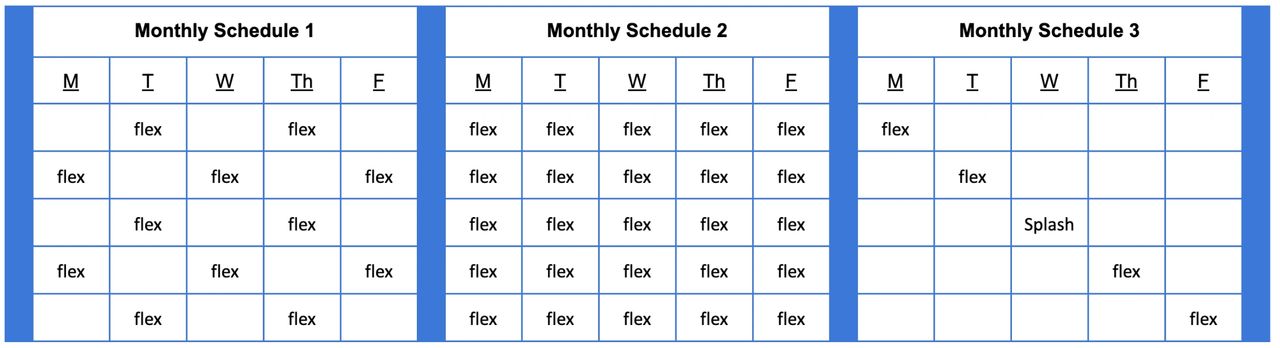
Regarding frequency, nearly 80% of our schools offer flex more than twice a schedule cycle with approximately 45% offering it every day. In addition to the specific Flex block frequency, some schools offer Flex days. Flex days tend to be programs offered for a full or partial day on specific date(s) in the school year, often before vacations or holidays – examples include Wellness Wednesday, Flex Friday, Splash Day, etc. Some monthly schedule examples are provided below.
Establish the Relationship Between the Schedules
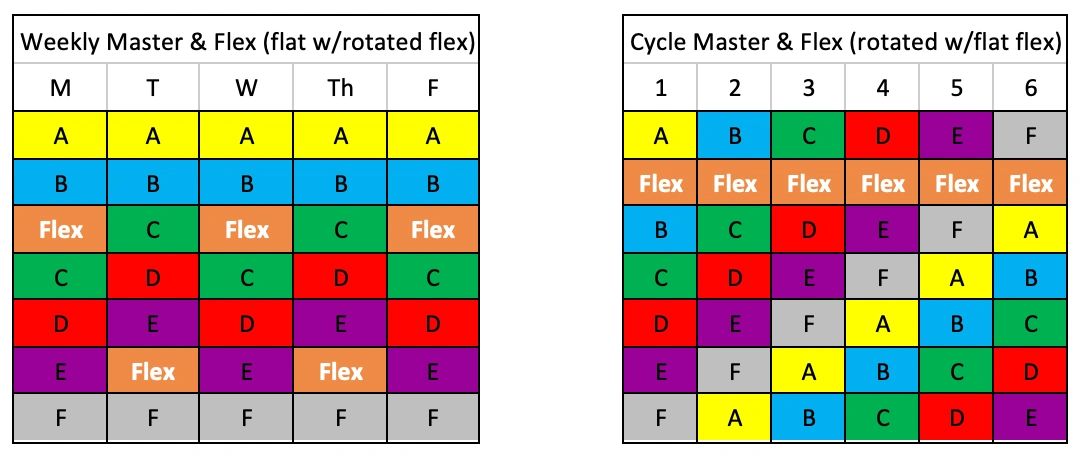
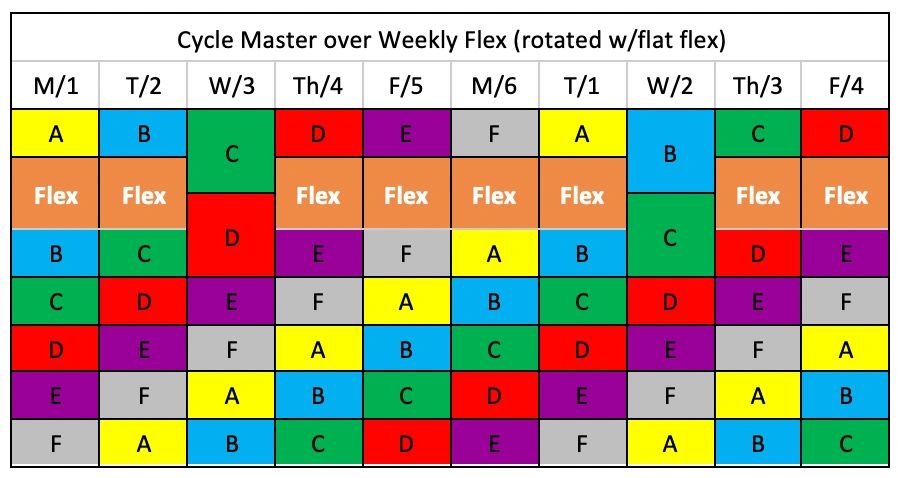
Determining the duration and frequency of Flex block begins to identify how your Flex schedule will merge with your academic schedule. These do not need to be on the same cycle; for example, the academic schedule could be a 4 day cycle but Flex block is offered every Wednesday. No matter how the schedules are structured, defining each allows the Flex block schedule to be integrated into the academic schedule. Some merged schedule cycle examples are below.
Identify Additional Flex Block Features
Once the schedules are merged, determining what Flex features to incorporate is next. This includes but is not limited to things such as: students are pre-scheduled into all, some or none of the Flex class offerings, integrating Planning day(s), etc.
Nearly 60% of our schools incorporate a Planning or Advisory day into the Flex schedule. This is when students are locked into a specific class where both students and teachers can plan out what students will attend for that cycle. There are a variety of names such as Anchor Day, No Move Monday, Advisory Day, etc. Approximately 30% of schools pre-schedule students into non-Planning day Flex classes and then allow them to then reschedule themselves into another offering, if desired.
Why MyFlexLearning?
Whatever decisions have been made regarding how you want to structure your Flex block, MyFlexLearning can support it! Our background in scheduling allows us to appreciate and understand that no two schools are the same when it comes to their academic and Flex schedules. Knowing this, we developed MyFlexLearning to support numerous configurations. We have yet to come across a schedule we cannot handle, but we welcome the challenge!